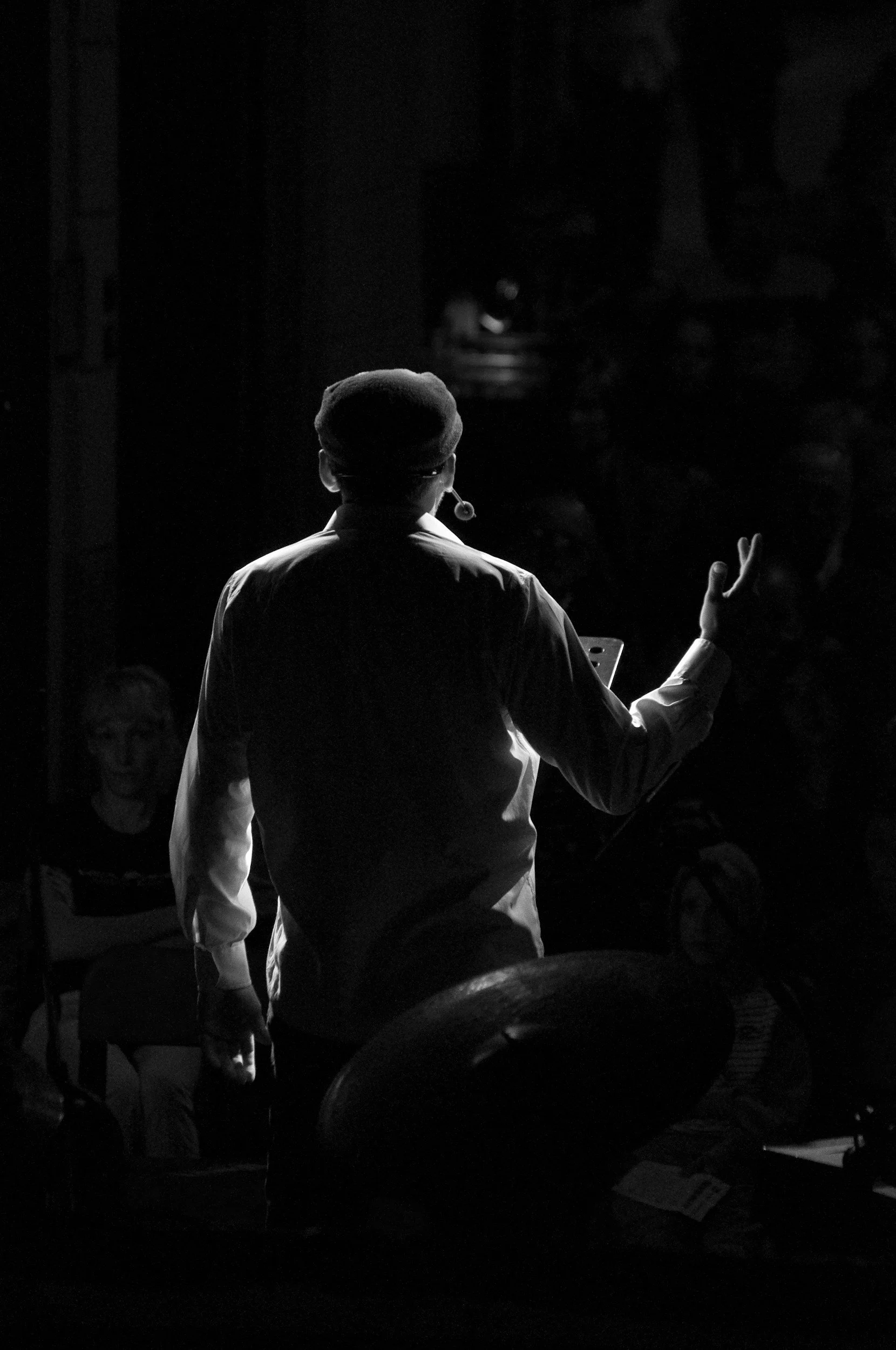
Drama Therapy
“Drama therapy is the intentional use of drama and/or theater processes to achieve therapeutic goals" (NADTA.org).
Drama Therapy in Nashville
When people hear "drama therapy," many imagine acting class, improv, or putting on a show. It's none of those things. No performance, no audience, no creative background required. What it is: a way of exploring your inner world by giving it shape, voice, and space — outside of your head, where you can actually look at it.
What is Drama Therapy?
Drama therapy is the intentional use of drama and theater techniques for therapeutic goals. Its roots go back over a century to psychodrama, and it's recognized alongside talk therapy as an effective, evidence-informed approach — not an alternative to "real" therapy, but another doorway into it.
In a session, this might look like:
Speaking as a part of yourself — your inner critic, your younger self, the part of you that's exhausted — rather than just describing it
Setting up a physical space that represents a relationship, a memory, or a feeling, and exploring it from different angles
Rehearsing a difficult conversation before it happens in real life
Stepping into someone else's perspective to understand a conflict differently
Why it works
Embodiment. A body in action doesn't lie. By physically engaging with an issue — standing, moving, gesturing — rather than only talking about it, we access information and insight that conversation alone often can't reach.
Externalization. When something stays only in your head, it can feel inseparable from you — like you are the anxiety, you are the inner critic. Drama therapy lets us bring it into the room, give it a form, and look at it from the outside. That shift alone is often where the change begins.
Who this is for
Drama therapy works especially well for people who:
Feel "stuck in their head" and want a different entry point into therapy
Struggle to access or name emotions through talking alone
Are working through identity, parts of self, or internal conflict
Want to rehearse or process a real-life situation (a hard conversation, a transition, a decision)
Are curious about creative or experiential approaches but feel intimidated by the word "drama"
Drama therapy can be used as a primary approach, and it pairs well with Somatic Therapy and Trauma Therapy — many clients move between approaches depending on what a session calls for.
I offer drama therapy in-person at my East Nashville office, serving Inglewood, Madison, and surrounding neighborhoods, as well as virtually throughout Tennessee and Ohio.
Curious to see it in action?
Watch a training Sarah led on drama therapy for the Nashville Psychotherapy Institute
Explore Improv for Anxiety with Unscripted Improv in Nashville — a fun, low-stakes way to explore similar territory outside of therapy
Schedule a Consultation →